Joy Foroughi
Executive Assistant


Building In-App Video Editors for Reels, TikTok, and Shorts in 2026
Discover the best video editing apps for Reels, TikTok, and YouTube Shorts in 2026. Explore agency builds and powerful SDKs for success.

If you're specifying short-form video editing for a mobile app in 2026, the main choice is between hiring a specialist agency like TouchZen to build a custom editor or licensing an SDK for a faster launch. Broadcast-grade timeline engines, AR-first kits, and lightweight turnkey editors cover most common use cases. The right option depends on your required features, budget, timeline, and level of product ownership.
Here's the tradeoff in plain terms:
Agency build (TouchZen): full ownership of UX, AI features, and roadmap; slower to launch, but nothing to license and no vendor lock-in.
Enterprise white-label SDK (BytePlus, IMG.LY): fastest path to a working editor, with less room for custom differentiation.
AR/AI-first SDK (Banuba, MeisheSDK): built for face filters and one-tap AI creation, ideal when your content strategy leans heavily on effects.
Lightweight turnkey SDK (iScripts EditPrime): ready UI templates and source-code ownership options for teams that want to move fast without a full custom build.
Key Takeaways
The right choice between an SDK and a custom build comes down to whether your short-form editor needs to be a differentiator or just a feature.
Point | Details |
|---|---|
Match category to goal | Enterprise SDKs win on speed, AR kits win on effects, agency builds win on ownership and custom AI. |
Run a spike before buying | Test memory, CPU, and export time on a low-end device using the vendor's sample app before signing a license. |
Watch the licensing model | BytePlus uses pay-as-you-activate, Banuba prices by MAU, and IMG.LY carries SOC 2 Type II on enterprise plans. |
Cross-platform parity saves time | A single rendering engine for iOS and Android cuts the rework of maintaining two separate editors. |
TouchZen fits custom ownership | For teams needing brand-owned UX or proprietary AI workflows, TouchZen's senior-led agency build avoids vendor lock-in entirely. |
Best Video Editing Apps for Reels, TikTok, and YouTube Shorts in 2026: The SDK Shortlist
Six real options dominate this space right now, and each one solves a different problem. Picking the wrong one costs you months of rework, so the profiles below focus on what actually differentiates them for a product team running a technical spike.
TouchZen builds the editor as a custom feature inside your broader app, not a bolted-on module. That matters when your short-form editing tool needs to share design language, user data, and AI logic with the rest of your product. TouchZen's senior-led delivery model means the developers writing your export pipeline are the same ones who scoped it, which shortens the back-and-forth that usually stalls agency projects. Agency build is the right call when you need bespoke UX, a proprietary AI workflow, or full ownership of the codebase going forward.
BytePlus sells a prebuilt social-style editor with on-device processing and a Magic Template feature that auto-generates highlight clips from raw footage. Licensing runs on a pay-as-you-activate model, so you only pay for the modules you ship. Vendor claims put integration at a few weeks for a standard build, which makes it a strong pick for MVPs racing to a launch date.
IMG.LY runs a native timeline engine across iOS, Android, Flutter, and React Native with a single rendering core, which means you're not maintaining two separate editing experiences. Its SOC 2 Type II attestation on enterprise plans is the kind of detail that matters once legal or security review gets involved. Native AI plugins and on-device encoding round out the pitch for teams that need cross-platform parity without rebuilding the engine per OS.
MeisheSDK is the broadcast-grade option. Its VE-Video-SDK supports 8K and HDR rendering with frame-accurate editing, well beyond what most short-form apps require but valuable if your product also serves creators exporting to platforms with higher fidelity standards. GitHub samples and a 14-day trial make evaluation straightforward for an engineering team.
Banuba leads with AR: face filters, AI-driven clipping, and plugins for both React Native and Flutter. Pricing runs on monthly active users rather than a flat license, which scales cleanly for apps still finding product-market fit. This is the pick when your roadmap centers on filters, duets, or AR stickers rather than straight timeline editing.
iScripts EditPrime ships ready-to-use UI templates and multi-track editing with an option to own the source code outright, which some teams prefer over an ongoing license relationship.
Product | Primary focus | Platform support | AI/automation | On-device vs cloud | Integration effort | Licensing/trial |
|---|---|---|---|---|---|---|
Custom-built editor tied to your product | Native iOS/Android, Flutter, React Native | Custom AI workflows, built to spec | Configurable to your requirements | Weeks to months, senior-led | Project-based, no recurring license | |
BytePlus | Templates, highlight-clip automation | Native, cross-platform | Magic Template, auto-clipping | On-device options | 2 to 3 weeks (vendor claim) | Pay-as-you-activate |
IMG.LY | Timeline editing, enterprise parity | iOS, Android, Flutter, React Native | Native AI plugins | On-device with hardware acceleration | Starter kit available | SOC 2 Type II on enterprise plans |
MeisheSDK | Broadcast-grade NLE, HDR/8K | Cross-platform, React Native | AI templates, one-tap creation | On-device rendering | GitHub samples, 14-day trial | Trial then licensed |
Banuba | AR filters, AI clipping | React Native, Flutter | Face AR, AI clip selection | On-device AR processing | Plugin-based, demo apps available | MAU-based pricing |
iScripts EditPrime | Ready-to-deploy templates | Native mobile | Capture filters, basic automation | On-device | Fast, template-driven | Source-code ownership option |
How Should You Choose Between an SDK and an Agency Build?
Start with what the feature actually needs to do, not what's easiest to buy. Rank your criteria in this order, because each one eliminates options faster than the last:
Required editing features. Do you need multi-track timelines, captions, and templates, or just a basic trim-and-export flow?
Scale and performance. Will this run on budget Android devices in emerging markets, or primarily on recent iPhones?
On-device vs. cloud processing. On-device processing can reduce latency and may help keep footage off external servers, depending on the implementation.
White-label and UI ownership. Can you fully restyle the editor, or are you stuck with the vendor's UI shell?
AI features you'll actually use. One-tap creation and auto-captioning sound great in a demo; confirm they work on your actual content before committing.
Compliance and data handling. Ask directly where footage is processed and stored during editing.
Before you sign anything, get answers to these from every vendor on your shortlist:
Can we run your sample app and inspect the export code ourselves?
What's memory and CPU usage on a three-year-old Android device?
Can we hook custom upload endpoints into your export pipeline?
Is pricing per-activation, per-MAU, or a flat annual license?
What's your support SLA, and what's on your roadmap for the next 12 months?
Do you maintain React Native and Flutter plugins, or just native SDKs?
Do you carry SOC 2 or equivalent attestations?
Pro Tip: Run a two-week engineering spike before you sign a contract. Integrate the vendor's quick-start sample, export a vertical 9:16 MP4, and measure memory and CPU on your lowest-spec target device. That's the real acceptance test, not the sales demo.
To estimate total cost of ownership, add license fees to the engineering hours your team spends on integration, then add ongoing maintenance as the SDK updates. An SDK integration usually runs in weeks; a custom agency build runs in months but avoids the license line entirely.
What Product Teams Get Wrong About Editor SDKs
The industry sells SDK selection as a feature checklist exercise, and that's where most teams go wrong. Templates, AI clipping, and AR filters all demo well, but the question that actually determines success is whether the SDK's rendering engine holds up on the low-end Android devices your actual users own. A cross-platform engine that renders identically on iOS and Android saves more engineering time than any single AI feature you'll add later.
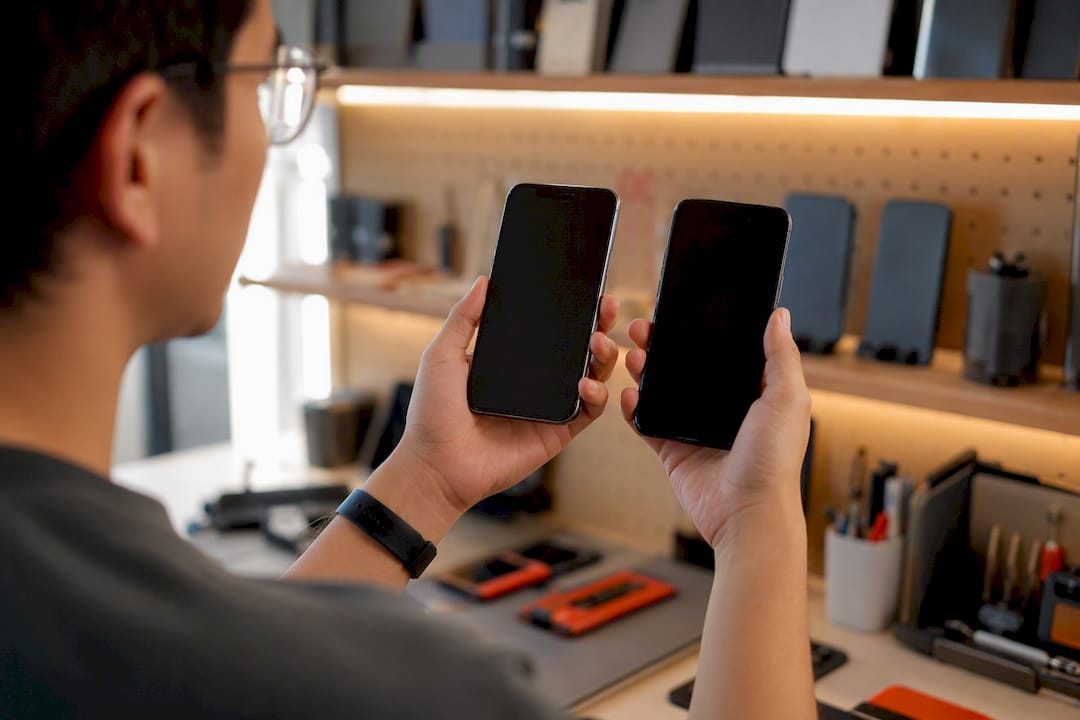
I'd also push back on the instinct to default to whichever SDK has the flashiest AI templates. If your app's differentiation is the editing experience itself, an SDK with someone else's UI ceiling caps how far you can take it. That's the case for an agency build: not because SDKs are bad, but because a licensed shell can't become your product's signature feature. AR-first kits are genuinely the right call when filters and effects drive your retention, per Banuba's own positioning, but plenty of teams license AR tooling they'll never fully use because it's the vendor most sales teams recommend by default.
Prioritize the spike test over the sales deck. Everything else follows from what actually runs on your users' phones.
Make the Editor Yours With TouchZen
Every SDK on this list ships someone else's UI, someone else's roadmap, and someone else's licensing terms attached to your product. TouchZen builds the editor as a native part of your app instead, with senior developers and designers on the project from kickoff through launch and beyond, so you're not stuck waiting on a vendor's next release cycle to fix something your users need now.
TouchZen’s team has launched mobile applications across multiple industries, including media-heavy products that required custom capture, editing, and export workflows built around specific user journeys. Cross-platform delivery covers iOS, Android, Flutter, and React Native, and support continues after launch so the editor keeps evolving as your usage data comes in. If you're weighing an agency build against an SDK, the clearest next step is a scoping call: bring your feature list and target devices, and get a real timeline and cost estimate back. Start scoping your app with TouchZen's team before you commit to a license.
FAQ
Should I Build a Custom Editor or License an SDK?
License an SDK when speed to market matters most; choose a custom agency build like TouchZen's when the editor needs to be a brand-owned differentiator with proprietary AI workflows.
How Long Does SDK Integration Actually Take?
Vendor estimates for a standard integration run two to three weeks, though actual timelines depend on how much UI customization and custom export logic your app requires.
Is On-Device Processing Better Than Cloud for Video Editing?
On-device processing reduces latency and keeps footage off external servers, which is why vendors like IMG.LY default to on-device encoding with hardware acceleration.
What Should I Ask Vendors Before Signing a License?
Request their sample app code, device-level memory and CPU benchmarks, export pipeline documentation, and licensing terms, whether that's per-MAU, per-activation, or a flat annual fee.
When Does an AR-First SDK Make Sense?
Choose an AR-first SDK like Banuba when your content strategy depends on face filters or AI-driven clipping; a timeline-first SDK is usually simpler if effects aren't core to your product.