Joy Foroughi
Executive Assistant


Best Video Editing Apps for iPhone in 2026: Build vs. Buy
Discover the best video editing apps for iPhone in 2026. Learn when to build, buy, or embed SDKs for optimal results.
TL;DR:
Embedding an SDK enables a startup to deploy a functional video editor within weeks but limits control due to vendor architecture and pricing constraints.
Building a custom video editor offers full control and IP ownership but requires multi-week development cycles for each subsystem and ongoing maintenance.
Hiring an agency like TouchZen provides bespoke pipelines and ongoing support, ideal when editing is the core product feature, and can be faster than evaluating SDK options.
The most common SDK options are IMG.LY for enterprise-grade on-device AI, Banuba for AR effects and real-time filters, and Meishe for high-resolution, high-performance deployments.
Startups should consider SDKs for quick MVPs unless editing is critical to their core value, in which case a custom build or agency partnership reduces long-term risks and scales better.
Which Approach Fits Your Startup: SDK, Build, or Hire?
Three paths lead to an iPhone video editor, and each trades speed for control differently.
Embedding an SDK means licensing a prebuilt editing engine (timeline UI, encoding, effects) and wrapping it in your own app shell. You get a working editor in weeks, but you're bound by the vendor's architecture and pricing tiers.
Building in-house means owning every subsystem: rendering pipeline, timeline UI, audio mixing, export encoding. It's the slowest and most expensive route, but you keep full IP and can differentiate on features no SDK offers.
Hiring an agency like TouchZen sits between the two: you get custom UX and proprietary pipelines without staffing a full video engineering team yourself.
SDK: Fastest to ship, lowest upfront cost, but locked into vendor roadmap and MAU-based pricing that scales with growth.
Build in-house: Full control and ownership, but multi-week builds per subsystem and ongoing maintenance burden (Banuba's engineering breakdown puts subsystems like timeline UI and export optimization each at multiple weeks of work).
Hire an agency: Senior engineers handle architecture decisions and native pipelines (AVFoundation, VideoToolbox), letting you focus on product and go-to-market.
A five-person startup team without a dedicated video engineer almost always leans SDK or agency. A team with deep AVFoundation experience already on staff might build.
Vetted Shortlist: Agency Plus SDK Vendors Worth Evaluating
Four options come up repeatedly when startups research iPhone video editing in 2026, and each earns its spot for a different reason.
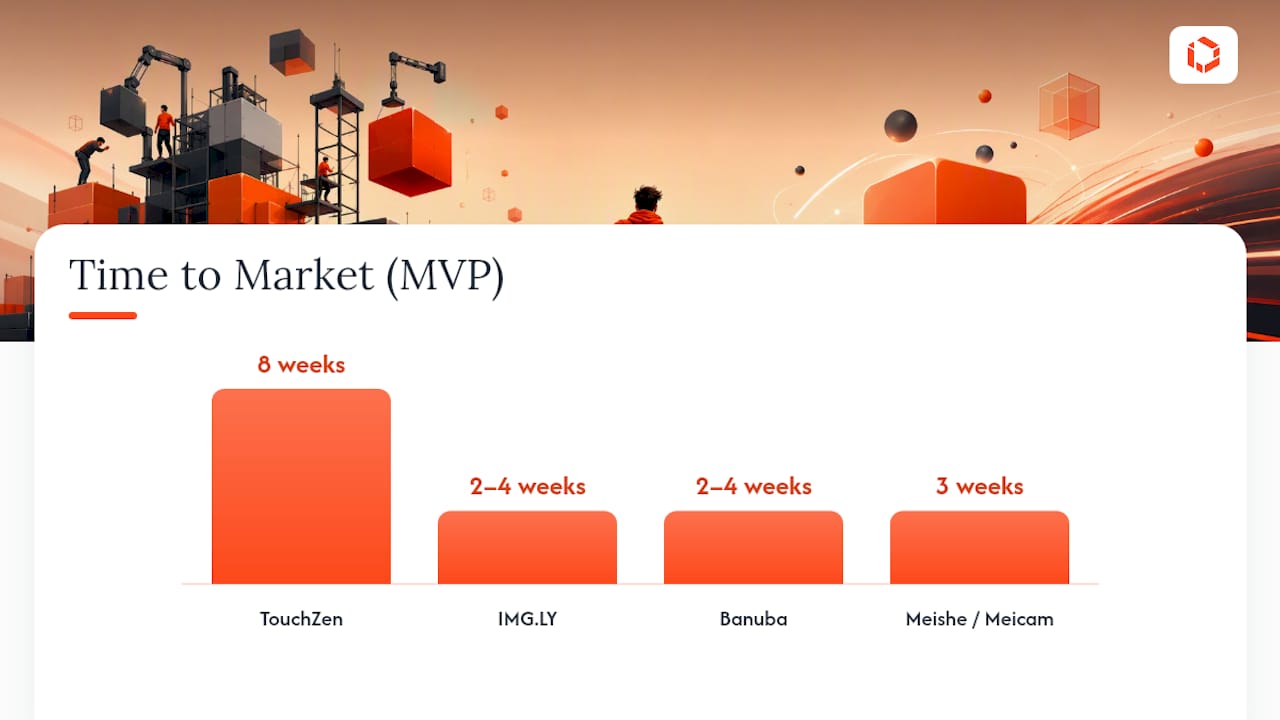
TouchZen delivers end-to-end custom iOS editor development, senior engineers, and ongoing support after launch, which matters when video is your product's main hook rather than a bolt-on feature. IMG.LY ships an enterprise-grade Mobile Video Editor SDK with timeline editing, on-device encoding, native AI plugins, and SOC 2 Type II credentials. Banuba focuses on AR effects and real-time filters, with strong React Native integration guidance for teams already on that stack. Meishe / Meicam targets high-performance and enterprise deployments needing 4K/8K editing, HDR, and privatized SDK options.
Option | Best For | Time to Market (MVP) | Integration Effort | Performance & Export | Customization | Pricing Model |
|---|---|---|---|---|---|---|
Bespoke UX, proprietary pipelines, full IP ownership | Timeline based on scope | Custom build, managed by agency | Native pipelines tuned per app | Full control | Project-based fee | |
IMG.LY | Enterprise apps needing documentation and on-device AI | Varies by feature set | Moderate, well-documented SDK | On-device encoding, cross-platform engine | High within SDK framework | License/enterprise tier |
Banuba | AR effects and real-time filter-heavy apps | 2-4 weeks | Low with React Native starter kits | Native real-time rendering | Moderate, effects-focused | MAU-based |
Meishe / Meicam | High-resolution or privatized enterprise deployments | varies by integration scope | Moderate, native SDK integration | 4K/8K, HDR, real-time preview | High for enterprise tier | License/enterprise tier |
Each vendor's pricing model shapes long-term cost differently: MAU-based fees scale with your growth, while a project-based agency fee is fixed once scoped.
TouchZen's Perspective: When Hiring Shortens Time-to-Market
Founders often assume "hire an agency" means slower and pricier than an SDK. In practice, a senior-led team skips the trial-and-error of evaluating three SDKs before picking the wrong one. Engage an agency when editing defines your product; adopt an SDK when it's a supporting feature.
— Cyrus
Ready to Build Your iPhone Video Editor?
TouchZen is the alternative to spending months evaluating SDK vendors and still ending up with a generic editing experience: you get senior engineers who've already shipped 75+ apps building your specific pipeline, with direct access to the people writing your code instead of a junior team relaying decisions through account managers.
A discovery call with TouchZen should cover three things: your MVP scope, whether an SDK integration or fully custom pipeline fits your timeline and budget, and what ongoing maintenance and retainer support looks like once you launch. If AI-assisted editing features (auto-captions, smart trimming) matter to your roadmap, TouchZen's AI-powered app development work applies directly. Startups weighing agency options can also check TouchZen's standing among top-ranked app developers. Start the conversation on the mobile app development services page and get a scoped estimate before you commit engineering hours to the wrong path.
Authoritative Docs and SDK Pages to Read Next
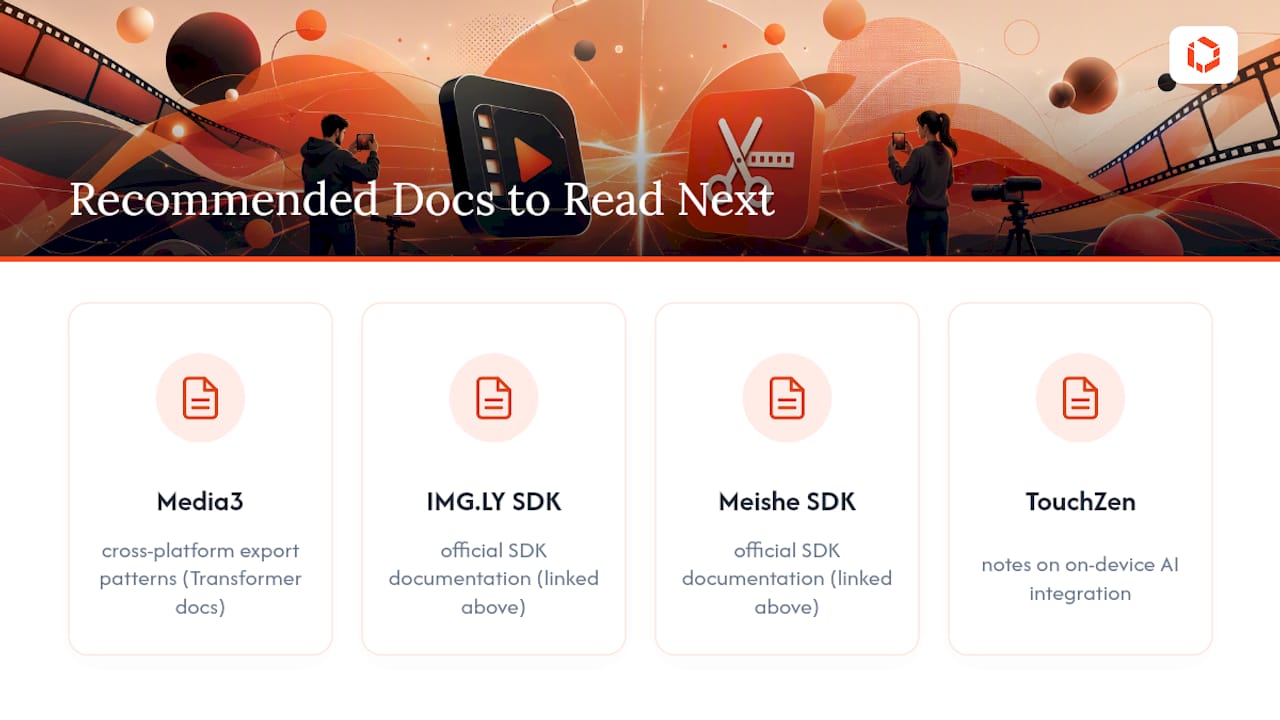
For engineering spikes, start with Apple’s AVFoundation and VideoToolbox documentation for native iOS media workflows, then review the official SDK documentation for IMG.LY, Banuba, or Meishe based on your product requirements. For AI-assisted editing features such as auto-captions and smart trimming, see TouchZen’s notes on on-device AI integration.
FAQ
Should a startup build a custom video editor or use an SDK?
Most startups should embed an SDK like IMG.LY, Banuba, or Meishe unless video editing is the core product differentiator, in which case hiring an agency like TouchZen for a custom build reduces long-term risk.
How long does it take to launch an MVP with an SDK?
SDK-based MVPs typically launch in 2 to 4 weeks, since vendors provide starter kits that handle encoding, timeline UI, and effects out of the box.
What's the biggest performance risk in iPhone video editing apps?
The biggest performance risk is slow exports, particularly with longer or high-resolution footage. VideoToolbox helps accelerate encoding, while Metal keeps previews and effects smooth during editing.
Does TouchZen work with existing SDKs or only build from scratch?
TouchZen can integrate an SDK into a custom UI layer or build a fully proprietary pipeline, depending on whether your priority is speed or full ownership of the editing engine.
What security concerns apply to video processing on iPhone apps?
Video files often contain sensitive user content, so on-device processing (rather than routing raw footage through third-party cloud servers) reduces exposure, and enterprise SDKs with SOC 2 Type II credentials like IMG.LY address data-handling requirements for regulated industries.