Joy Foroughi
Executive Assistant


Push Notification Strategy That Doesn’t Get Your App Muted
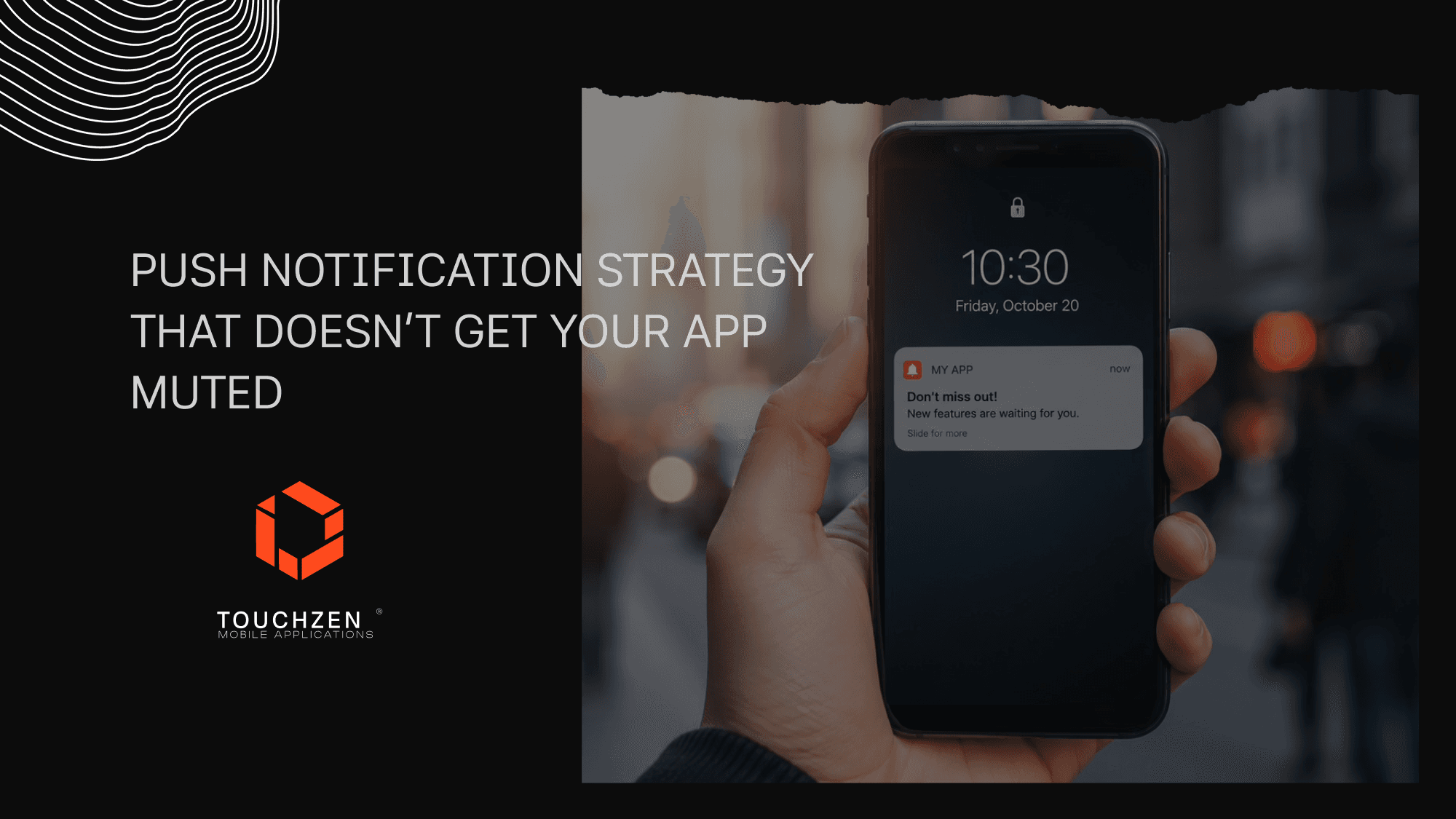
Push notifications can lift retention or quietly kill it. Most apps get muted because they treat notifications as broadcasts, not conversations. Here’s a practical strategy for founders who want engagement without notification fatigue.
Introduction
For most mobile apps, push notifications are the single largest lever between a user who opens the app twice and a user who opens it daily. They're cheap to send, hard to ignore, and—when they're tied to real user behavior—directly responsible for a meaningful share of weekly active users. Founders who build a sharp push strategy early often see retention curves that look completely different from competitors shipping the same feature set.
The problem is that the same channel that drives retention is also the fastest way to lose a user permanently. A single bad notification at the wrong moment can be enough for a user to swipe, mute, or uninstall. Once notifications are off, getting them back is nearly impossible. And unlike a broken feature, this kind of damage is silent—your team won't see complaints, just a slow drop in re-opens.
Most founders learn this the hard way. The team ships a notification system, no one objects internally, and everyone assumes it's working. Meanwhile, opt-out rates climb week over week, re-open rates dip, and retention quietly leaks through a hole no one is watching. By the time someone investigates, the trust is already gone.
This guide walks through how to build a push notification strategy that earns attention instead of demanding it—covering permission, segmentation, timing, copy, and fatigue control. The principles apply whether you're shipping a brand-new app or scaling one already in the App Store and Google Play.
Key Takeaways
Topic | Takeaway |
|---|---|
Permission | Never ask on the first launch. Earn the right to notify before you request it. |
Segmentation | Behavior-based segments outperform demographic ones. Target what users do, not who they are. |
Timing | Time zones, weekday patterns, and individual usage windows matter more than absolute time of day. |
Personalization | Specificity beats volume. One relevant notification weekly beats five generic ones. |
Measurement | Track opt-out rate and notification-to-revenue—not just open rate. |
Why Push Notifications Fail
Most push systems break for the same handful of reasons. Permission is requested on the first app launch, before the user understands the value. Notifications are treated as broadcasts—the same message blasted to everyone. There's no segmentation, so users get content irrelevant to their behavior. Copy is generic. Volume creeps up as the marketing team layers on campaigns without retiring old ones. And critically, no one tracks opt-out rate, so the slow churn never surfaces in a standup.
Each of these is fixable. But they compound, and a founder who solves only one or two will still see notifications underperform.
Earn Permission Before You Ask for It
The biggest single lever in push strategy is when you trigger the system permission prompt. On iOS, founders generally see opt-in rates anywhere from 40% to over 70%, and the difference almost always comes down to one thing: timing.
The principle is simple. Never ask for permission before the user has experienced core value. A few examples:
Fitness app: Ask after the first workout is logged, when the user has just felt the small win of tracking progress.
Fintech app: Ask after the first bank account is connected, when the value of balance alerts or fraud notifications is obvious.
Marketplace app: Ask after the user saves their first item or messages a seller, when delivery and reply alerts genuinely matter.
Productivity app: Ask after the user creates their first project or invites a collaborator, when reminders and mentions become useful.
Health app: Ask after the user sets a goal or completes their first check-in, when streaks and reminders directly support the user's intent.
A useful pattern is to show a pre-permission screen first—a custom in-app prompt explaining exactly what notifications the user will receive and why. If the user taps "Yes," you fire the system prompt. If they tap "No," you haven't burned the only chance you get. They can be re-prompted later, after another round of value delivery.
Asking cold on first launch is the most common mistake in the entire push stack. It optimizes for a number that doesn't matter much (initial opt-ins) at the cost of the one that does (long-term active opt-ins six months in).
Segment by Behavior, Not Demographics
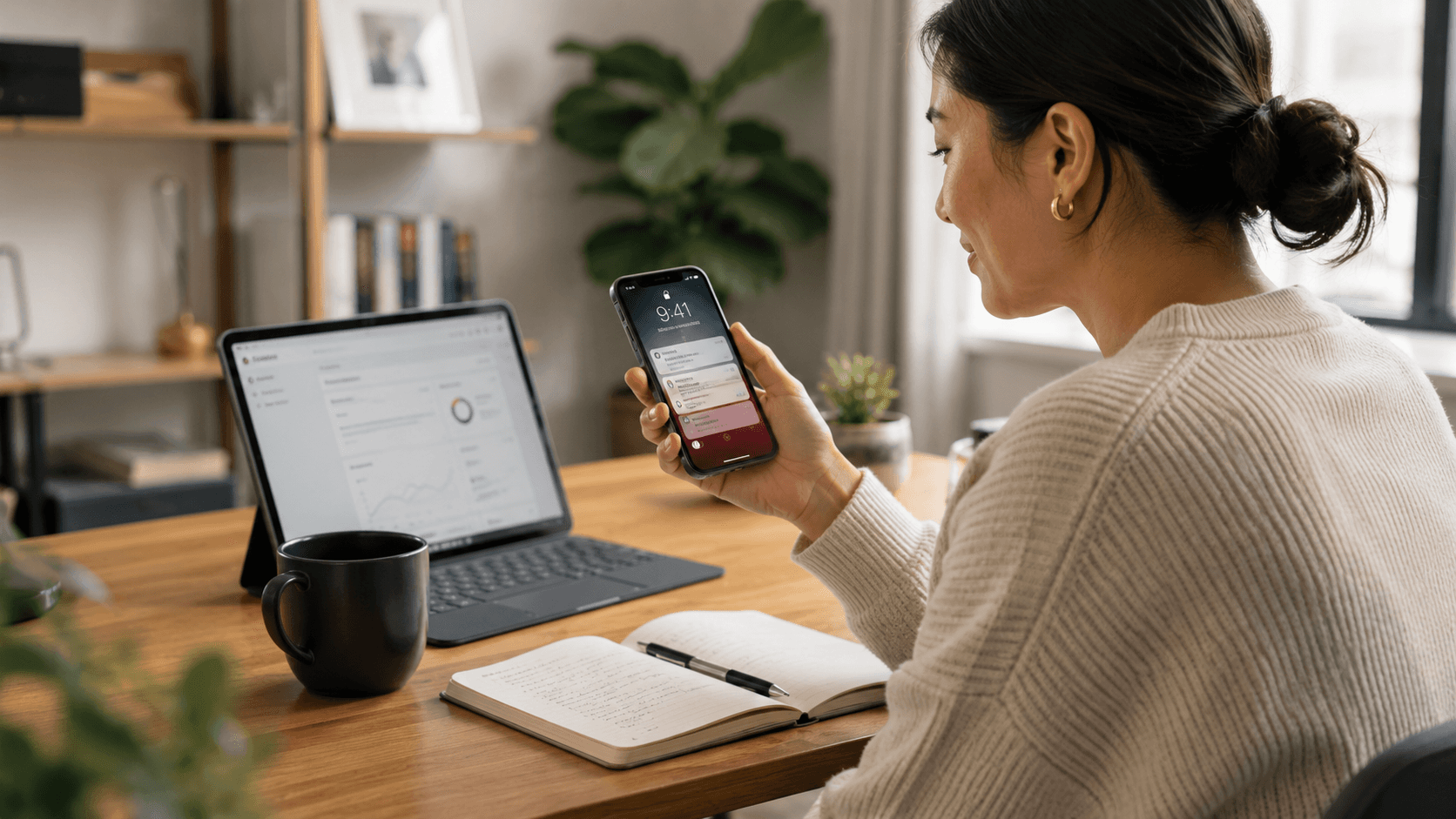
Segmenting users by signup date, country, or device type rarely improves notification performance. Behavioral segments do, because they're tied to what the user actually wants right now.
Useful behavioral segments include:
New users who haven't completed onboarding within 24 hours.
Power users who suddenly haven't opened the app in 3 days.
Users mid-funnel on a key action—an unfinished cart, a draft post, a partial signup, a half-completed profile.
Users approaching a subscription renewal or trial expiration.
Users who just hit a milestone: 10 workouts, first $100 saved, fifth invoice sent, first sale completed.
Each segment deserves a distinct notification with distinct copy. A user about to cancel a subscription needs a different message than a user who just hit a personal best. A fitness app user who skipped two scheduled workouts needs different language than one in the middle of a 30-day streak.
Get the Timing Right
Bad timing is one of the top reasons notifications get ignored or muted. A few practical rules:
Respect time zones. Sending at 9 AM EST is fine for half your users and 6 AM in California—nobody opens an app while still in bed.
Learn each user's window. Most modern notification platforms can detect when a specific user typically opens the app. Sending close to that window dramatically improves open rates.
Avoid push storms. If a user gets three notifications in an hour, the fourth gets swiped away unread.
Match category to time. Fitness, news, and productivity tend to do well in the morning. Entertainment, social, and retail typically do better in the evening. Food delivery peaks at lunch and dinner. Fintech alerts fit best around the time users typically check balances, often early morning and early evening.
Write Notifications That Earn the Tap
Specificity is the single biggest copy lever. Compare a few examples:
Productivity app. Weak: "We miss you!" Strong: "Sarah, your Q2 roadmap doc is one section from done—want to finish it?"
Fitness app. Weak: "Time to work out!" Strong: "You're one run from closing your weekly goal. 20 minutes does it."
Marketplace app. Weak: "New items added!" Strong: "Three new listings under $50 in the bookshelves you've been browsing."
Fintech app. Weak: "Check your balance." Strong: "Your direct deposit hit. You're $120 ahead of last month at this point."
Health app. Weak: "Don't forget your check-in." Strong: "You've logged 5 days in a row—two more for your longest streak yet."
The strong versions reference real user behavior or content. They tell the user exactly why this notification was sent to them, specifically. That's the difference between something that gets tapped and something that gets dismissed.
Avoid Notification Fatigue
Even a well-built notification system breaks down once volume creeps up. Founders who scale apps without scaling notification discipline usually watch retention soften over months and never connect it back to push.
Practical safeguards:
Cap volume per user. A "notification budget" of 3–5 per week is a sensible starting point for most apps.
Use the deliver-quietly tier for non-critical alerts—both iOS and Android support it.
Suppress notifications for users who haven't tapped one in 14 days. Re-engage them through other channels instead.
Offer granular preferences in-app. Let users mute marketing while keeping transactional. Founders are often surprised how few users actually opt out fully when given the option to opt out partially.
Watch opt-out rate weekly. It's your earliest warning signal.
Comparison: Transactional vs Behavioral vs Marketing
Type | Example | Best Use | Risk Level |
|---|---|---|---|
Transactional | "Your order has shipped" | Confirmations, status updates, security | Low—users expect these |
Behavioral | "You're 1 workout from your weekly goal" | Engagement tied to user actions | Medium—high relevance pays off |
Marketing | "30% off this weekend only" | Promotions and announcements | High—first to be muted |
A healthy notification mix leans heavily on transactional and behavioral. Marketing notifications can work, but every one of them costs trust if it lands as irrelevant.
Pro Tip
Build a single notification budget per user—a hard cap on how many messages any one user receives in a rolling 7-day window. Marketing, lifecycle, and behavioral notifications all draw from the same budget. This forces internal teams to compete for the most valuable message instead of stacking on top of each other. It's the cleanest way to prevent the slow volume creep that quietly kills most notification programs over time.
Building Push Strategy with TouchZen Media
A strong push notification strategy isn't a feature you bolt on at the end—it's part of how your app earns its place on the home screen. The teams that get this right design permission flows, segmentation logic, and copy frameworks alongside the rest of the product, not as an afterthought.
At TouchZen Media, we work with founders and product owners to build mobile apps where retention is engineered in from day one. That includes permission flows tuned for long-term opt-in rates, behavioral segmentation tied to the metrics your business actually cares about, and notification copy that respects users while moving real numbers. If you're planning a new app or rethinking how an existing one engages users, we'd be glad to talk through what your push strategy could look like.
FAQ
1. When should I ask for push notification permission?
After the user has experienced core value—usually after the first meaningful action in your app, not on first launch. A pre-permission screen explaining the value before the system prompt is one of the easiest ways to lift long-term opt-in rates.
2. How often should I send push notifications?
Start conservative. For most apps, 3–5 notifications per user per week is a safe upper bound across all categories combined. Watch your opt-out rate weekly—if it ticks up, you're sending too many or the wrong kind.
3. What's a healthy opt-out rate for push notifications?
Industry benchmarks vary widely by category, but a steady or declining opt-out rate matters more than the absolute number. If opt-outs spike after a specific campaign, that campaign is the problem—not push notifications generally.
4. Should I use push notifications or in-app messages?
Both, for different purposes. Push notifications bring users back when the app is closed. In-app messages drive action while users are already engaged. The two complement each other—use push to start the session, in-app messages to shape what happens during it.