TOUCHZEN ®
Local time:
goodDeeds

Client
goodDeeds
Timeline
4 Months
Launch Year

Giving that feels like sending a gift, not writing a check...
goodDeeds came to us with a conviction and a hard problem. The conviction: people genuinely want to help families in their own communities. The problem: almost every way to do that asks you to hand money to an institution and trust that it lands somewhere useful. The donor never sees the family. The family never sees the donor. Both sides lose the part that actually matters. Traditional charitable giving is built around aggregation. Pool the funds, distribute at scale, report back in percentages. It works for logistics and fails at connection. It also puts families in the position of asking for money, which carries a stigma that keeps many of them from asking at all. goodDeeds wanted to invert the model entirely: real families, itemized needs, purchased through retailers people already use, delivered to the door. We studied the categories on both sides of that equation. Donation platforms and crowdfunding tools on one side, e-commerce checkout and gift registries on the other. The insight sat squarely between them. The emotional model people already understand for direct giving isn't philanthropy, it's a wishlist. Someone tells you what they need. You buy it. It shows up. Our job was to build that mechanic into a product that could verify families, protect their dignity, and prove that every dollar turned into a real object in someone's hands.


/Project Goals/
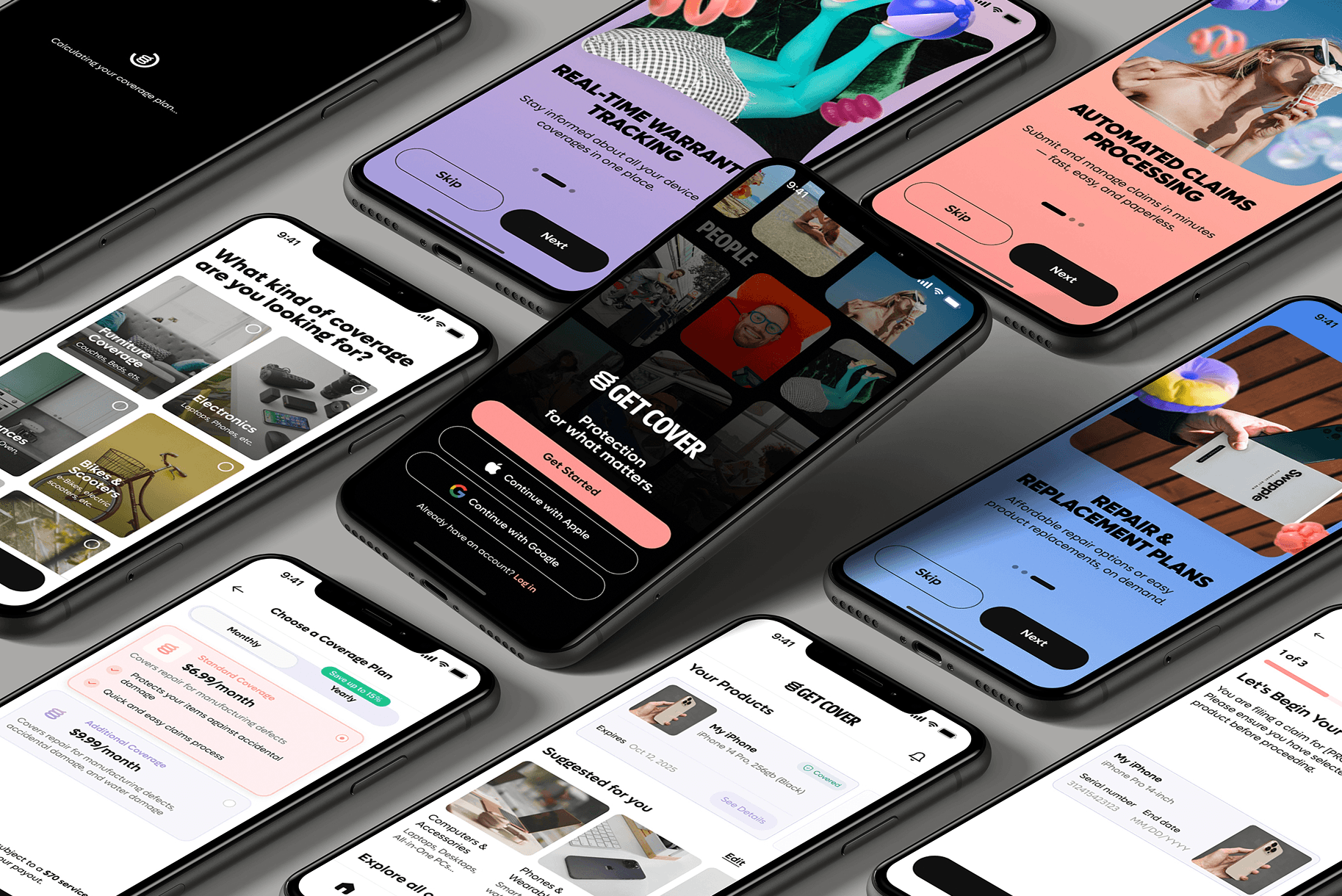
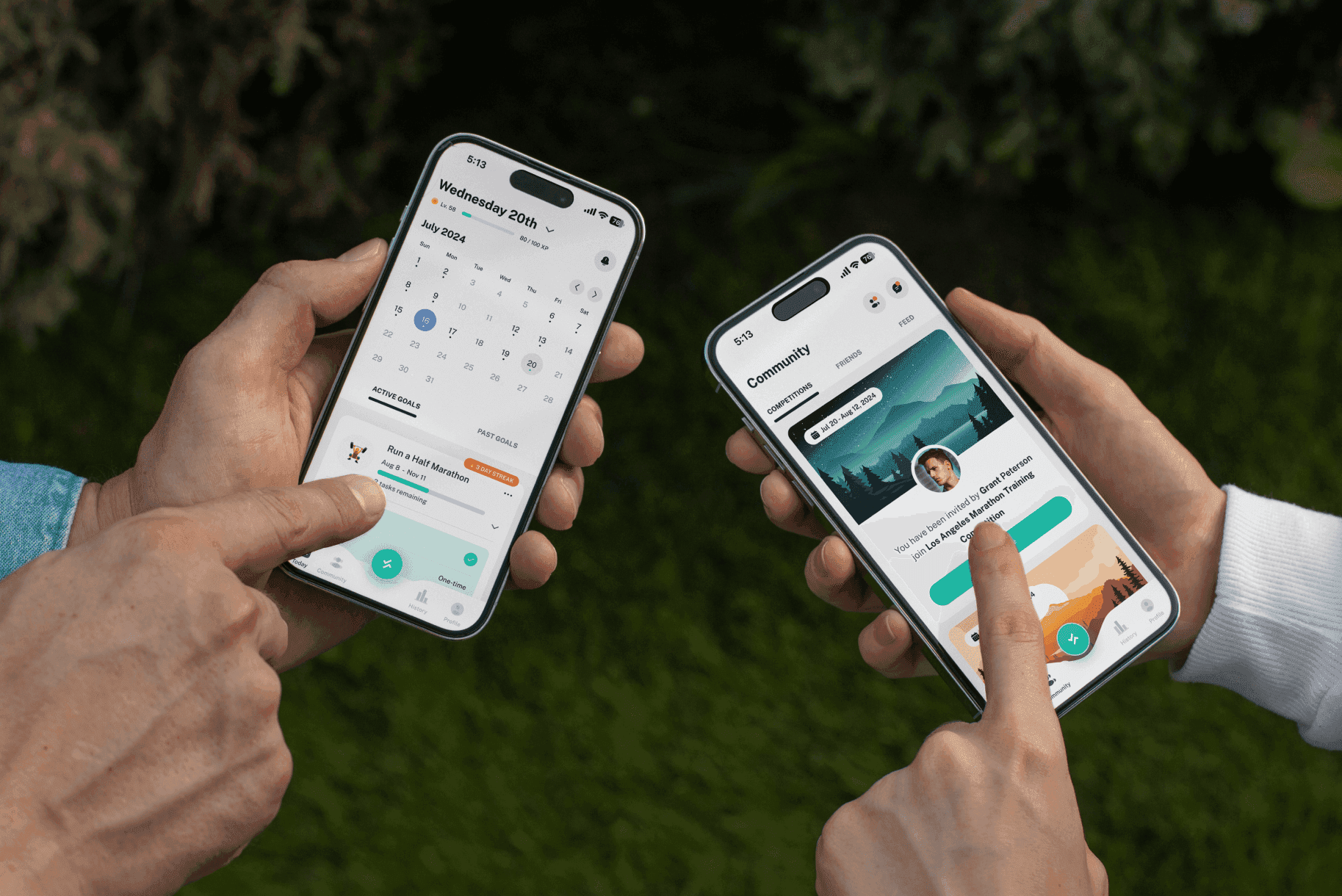
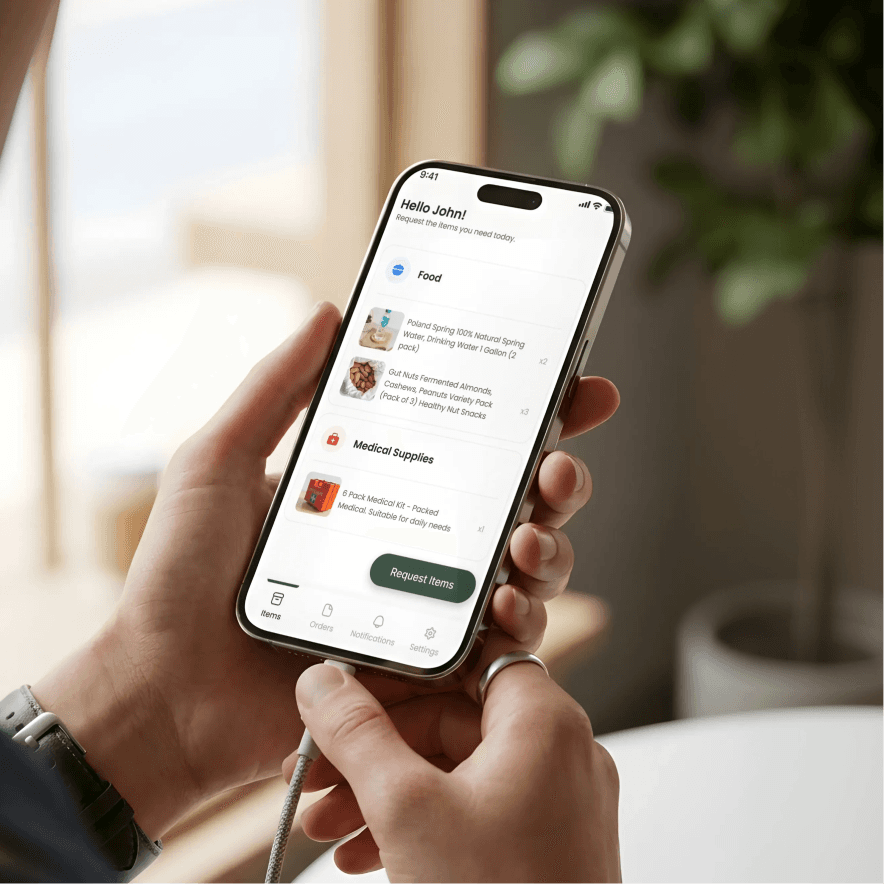
The engagement spanned the full product ecosystem: a native iOS app, a native Android app, and a custom CMS for the goodDeeds team to onboard families, verify them through nonprofit and school partners, manage item requests, and track orders end to end. Three surfaces, one system, and no room for the family-facing side to feel like an afterthought. Our first directive was to remove cash from the equation. Families request specific items such as groceries, baby supplies, and household essentials through trusted retailers, and donors fulfill those items directly. That single decision resolved the trust problem and the stigma problem simultaneously. Donors know exactly what their contribution provides because they picked it off a list. Families aren't asking for a handout, they're sharing a need. Second, we designed for browsing, not pledging. The donor feed had to make choosing a family feel intuitive and personal rather than overwhelming, with matching driven by location, urgency, and the causes a donor gravitates toward. Fulfillment had to collapse into a familiar checkout flow measured in seconds, because friction is where good intentions die. Third, we built the proof loop. Every goodDeed is tracked from purchase through delivery confirmation and surfaced back to the donor as a running record of families helped and items delivered, with streaks and impact tracking to turn a one-time gesture into a habit. Behind it, the CMS gives the team the operational spine to keep verification, requests, and order status accurate at volume. It is the unglamorous layer that makes the transparency claim actually true.


/Results/
goodDeeds launched on the App Store and Google Play in 2026 with the full three-platform system in place. More than 200 families have submitted verified item requests through the platform, with orders being fulfilled on an ongoing basis rather than in campaign bursts. That is the strongest signal that the model works as a repeatable behavior and not a launch-week spike. The iOS app holds a 5.0 rating and has shipped steadily since release. The bigger outcome is positional. goodDeeds now has a defensible category of its own, instant micro-philanthropy, and the infrastructure to grow into it. The CMS scales with every new nonprofit and school partner brought into the verification pipeline, the donor apps are built to absorb the roadmap ahead including corporate giving programs and recurring goodDeeds, and the transparency loop that made the first 200 families possible is the same one that will carry the next 2,000.
Design
Development
Strategy
/More projects.
Project name
Description