

Joy Foroughi
Executive Assistant


How to Sunset a Mobile App Gracefully: A Founder's Guide to App End-of-Life
Learn when and how to sunset a mobile app gracefully, from user communication and data export to App Store removal, legal considerations, and product migration planning. Not every mobile app should live forever. A graceful sunset is a mature product decision, not a failure. Here is how to retire an app responsibly while protecting users, data, brand trust, and what comes next.
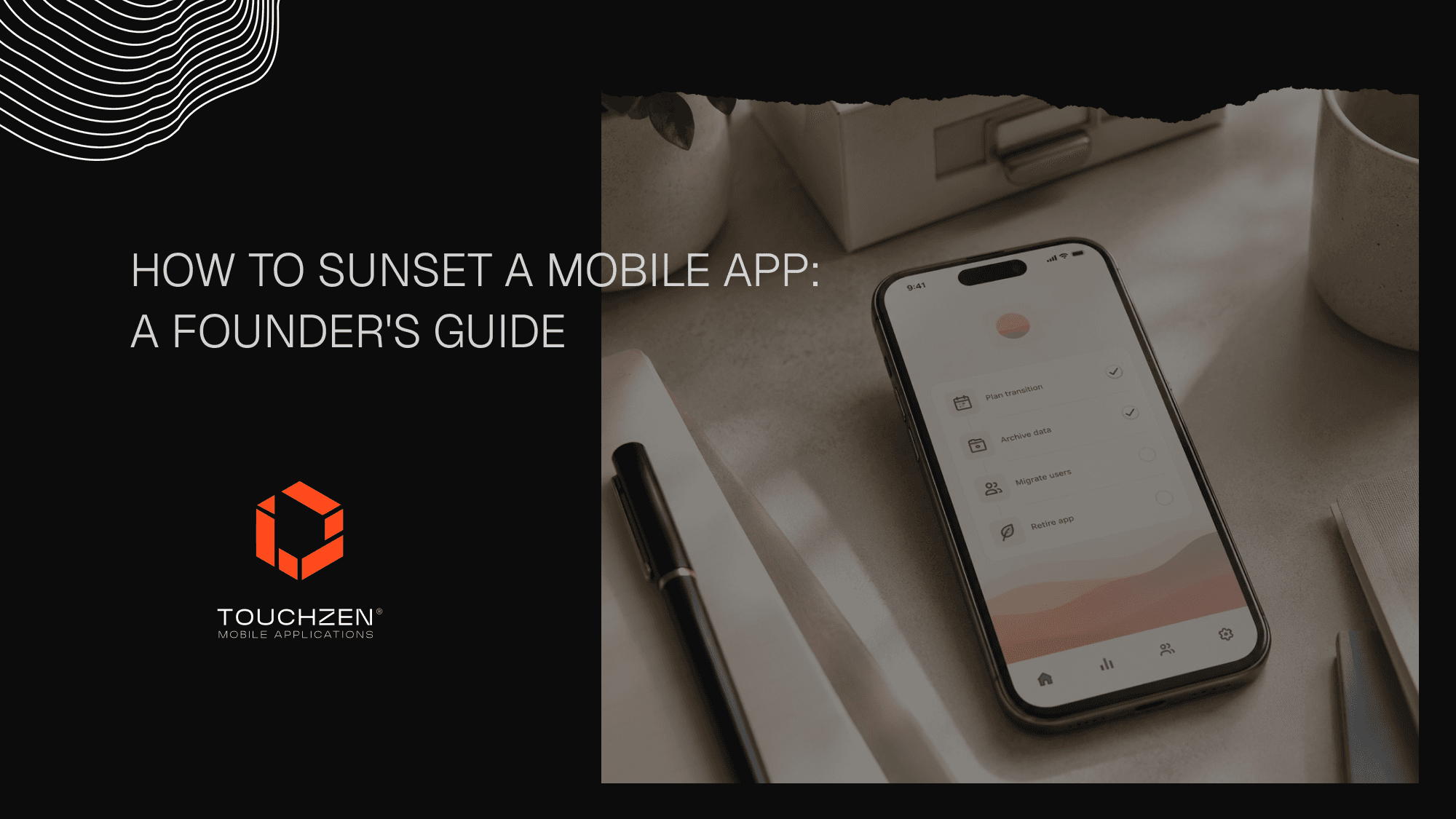
Introduction
Most articles about mobile apps focus on launching. Far fewer talk about the other end of the lifecycle, even though every product team eventually faces it. Some apps fall out of sync with the business. Some were acquired and never quite fit. Some are older MVPs that have been replaced by a newer platform. Some are technically alive but no longer earning their keep.
In all of those cases, knowing how to sunset a mobile app is part of running the product well. A graceful sunset protects existing users, preserves brand trust, keeps support and legal teams out of trouble, and clears the runway for what comes next. A messy sunset does the opposite, often quietly and over a long period.
This guide is for founders and product owners weighing what to do with an app that has aged, drifted, or been replaced. It walks through what app sunset actually means, the signs that it is time, how to decide between sunsetting and rebuilding, the steps in a graceful shutdown, what to say to users along the way, and the technical and store-level work that needs to happen before anything is turned off.
TouchZen Media mobile app development partner
What Does It Mean to Sunset a Mobile App?
"App sunset" is a calm phrase for an honest decision. It means deliberately winding down a mobile app, on a planned timeline, in a way that protects users and the business.
In practice, sunset can mean a few different things, and most teams move through more than one of them:
Pausing new development while continuing to support the current version
Removing the app from the App Store or Google Play for new downloads, while existing users still have access
Migrating users to a different app or platform
Shutting down backend services that power the app
Fully retiring the product across all surfaces
Each of these is a separate decision with its own timeline. A graceful sunset usually sequences them deliberately, not all at once.
Signs It May Be Time to Sunset a Mobile App
A few patterns show up consistently when an app is approaching end-of-life.
Active usage has dropped to a level that no longer justifies the work. Maintenance cost has crept up, especially around OS updates, third-party SDKs, and security patches. The codebase is outdated and increasingly hard to keep current. Compliance or security risk is rising, particularly in regulated categories. App Store and Google Play reviews are dragging down because users are running into features the team has not supported in a while. Backend hosting and infrastructure are costing more than the app is earning. The business has pivoted, and the app no longer matches where the company is going. A newer product has taken over the same audience, and keeping both alive is creating customer confusion.
Any one of these can be managed. Three or more usually mean it is time to look at the full lifecycle honestly.
Sunset, Rebuild, or Maintain: How to Decide
Before deciding to retire an app, weigh the alternatives against the facts.
Maintain when the app still has meaningful active users, the cost of keeping it healthy is reasonable, and the risk profile is acceptable. Not every old app needs to be replaced. Some run well on a modest support budget for years.
Rebuild when the demand is there but the technical foundation is not. If usage is real and the business case is intact, a thoughtful rebuild on a modern stack is often a better answer than a sunset. A deeper technical debt audit can help clarify whether a rebuild is worth it.
Sunset when the app no longer supports the business, the cost of supporting it has outgrown the value it returns, or the risk of continuing is rising faster than the upside. Sunset is not a failure verdict on the original product. It is a mature acknowledgment that the product has done its job.
Merge or migrate when a newer product can serve the same audience better. The cleanest end-of-life path is often one where users are moved into a stronger experience rather than simply left behind.

How to Sunset a Mobile App Gracefully
This is where execution matters most. A graceful sunset is a sequence of deliberate steps, not a single switch.
Audit the current state. Before anything is announced, the team should have a clear picture of active users, active subscriptions, backend services in use, App Store and Google Play status, third-party integrations, and any contractual obligations to existing customers.
Review legal, privacy, and data retention requirements. Different jurisdictions have different rules about user data, subscription handling, and disclosure timing. The legal review should happen before users are notified, not after.
Decide whether users need a migration path. If there is a successor product, the migration flow is the most important user-facing work in the entire sunset. If there is no successor, users need a clear way to download their data and understand what their next options are.
Prepare a communication timeline. A 60- to 90-day window is a reasonable starting point for most apps, with shorter windows for low-usage products and longer windows for apps with paying subscribers or sensitive data.
Notify users early and clearly. Communication should land through every channel the app has used to reach users: in-app messages, push notifications where appropriate, email, website banners, help center articles, and updates to the App Store and Google Play listings.
Offer data export where relevant. A simple export of the user's own data, in a portable format, protects trust and reduces support load. For many app categories, this is also a legal requirement.
Handle paid subscriptions and refunds carefully. Active subscribers deserve clear options: continue access until the end of their billing period, pro-rated refunds where appropriate, or migration to a successor product with their plan honored. Mishandling this is the fastest way to lose brand trust in a sunset.
Update App Store and Google Play listings. Before removing the app, update descriptions, screenshots, and support links so anyone who lands on the listing understands what is happening.
Remove the app from stores only after communication is complete. Pulling the listing before users are informed is the single most damaging mistake teams make in a sunset.
Shut down backend services safely. Once active usage is essentially zero, services can be decommissioned in stages, with appropriate backups retained per your data retention policy.
Keep a support page or FAQ live for a transition period. Even after the app is gone, users may search for answers. A simple landing page with frequently asked questions reduces support load and preserves trust.
User Communication: What to Say and When
A reasonable communication timeline for most consumer apps looks something like this.
60 to 90 days before shutdown. The first formal announcement. Explain that the app will be retired, when, why in plain terms, what users should do to export their data or migrate, and how to reach support with questions. This goes through in-app messaging, email, the app's home screen if appropriate, and the website.
30 days before shutdown. A second wave of communication, this time more direct. Repeat the timeline, highlight any actions users still need to take, and confirm the date the app will stop working. Push notifications can be appropriate here if the app uses them.
7 days before shutdown. A final reminder. Short, clear, and action-oriented. Anyone who has not yet taken action gets a last nudge.
Final shutdown notice. A simple confirmation that the app is now retired, where users can find ongoing support if needed, and what their next options are.
The principle is consistent: no user should be surprised when the app stops working. Surprise is the source of nearly every complaint, refund request, and bad review that follows a sunset.
TouchZen Media premium mobile app experience
Technical Considerations Before Turning Anything Off
The sunset is not done when the announcement goes out. The work behind the scenes determines whether the wind-down is clean or messy.
Before any service is decommissioned, the team should map and address each of the following. API dependencies between the app and backend services should be inventoried, with shutdown order planned to avoid breaking anything still in use. Cloud hosting costs should be reviewed and reduced in stages so the bill goes down as usage falls. Database backups should be taken at appropriate intervals through the wind-down, with retention aligned to your privacy and legal commitments. Data export tools should be tested before they are needed. Authentication services should remain active long enough for users to log in and export. Analytics and push notification systems should be turned off in a planned order, not abruptly. Third-party SDKs should be reviewed for any active contracts or auto-renewing fees. App Store and Google Play developer account settings should be checked for anything that could quietly cause problems. Security patches should continue through the transition window. A live app, even on its way out, is still a live app.
App Store and Google Play Considerations
n many cases, app stores allow teams to remove an app from new downloads while managing access for existing users, but the exact options depend on the platform, app category, and current developer policies.
A few practical principles hold across both stores. Update the listing copy, screenshots, and support links before removing the app, so users who find it understand the situation. Handle subscriptions carefully, since auto-renew billing continues until subscriptions are formally canceled or moved. Confirm that developer account settings, tax forms, and payout details are still correct, since billing for retired apps can continue for months as final cycles wind down. And check the rules on app removal in each platform's current developer documentation, since some categories of apps have additional requirements around notification or data handling.
What Not to Do When Retiring an App
A short list of patterns that turn quiet sunsets into noisy ones.
Shutting down without notice, which guarantees support volume, refund requests, and bad reviews.
Removing the app from stores before messaging existing users, leaving them to discover the change by accident.
Ignoring paying subscribers, who will read silence as bad faith and remember it.
Failing to offer data export or migration options, especially for apps that hold personal or business-critical content.
Letting the app break silently as backend services are decommissioned, instead of failing cleanly with a clear message.
Leaving outdated privacy policies, support URLs, or contact information online after the app is gone.
Forgetting backend, third-party, or hosting costs that keep billing the company months after the app is officially retired.
How a Mobile App Partner Can Help
A graceful sunset is product work, design work, engineering work, and communication work all at once. Many teams do not have the bandwidth to handle all of it well alongside whatever they are building next.
At TouchZen Media, we work with founders and growing companies across the full mobile app lifecycle, from strategy and design through launch and post-launch support. That includes the end of the cycle as well as the beginning. We help teams audit their existing app and codebase, weigh the decision between maintain, rebuild, migrate, and retire, plan migration flows where users are moving to a successor product, design the in-app and email communication that goes out during a sunset, manage App Store and Google Play updates, support backend shutdown or transition, and build the replacement app when one is needed. Examples of the kinds of complex, premium mobile experiences we work on can be found across our mobile app portfolio, including the PTX Therapy case study for modernization and the Amalfi Jets case study for premium operational apps.
If you are sitting with an aging or underperforming app and unsure whether the right move is to sunset, rebuild, or modernize, talk to TouchZen Media about your next product decision. A short audit can often clarify the best path forward quickly.
Conclusion
Knowing how to sunset a mobile app is part of mature product work. It protects the users who trusted the app in the first place, the brand that shipped it, and the resources that could otherwise be tied up maintaining something that no longer fits. A graceful sunset is not giving up. It is making space for the next better product decision, and giving everyone involved a clean handoff into whatever comes next.
The teams that do this well plan the sunset like they planned the launch: deliberately, with clear communication, real technical care, and respect for the people on the other side of the screen.
Frequently Asked Questions
1. What does it mean to sunset a mobile app?
Sunsetting a mobile app means deliberately winding it down on a planned timeline. That can include pausing new development, removing the app from the App Store or Google Play, migrating users to a successor product, shutting down backend services, and ultimately retiring the product. A graceful sunset sequences these steps rather than doing them all at once.
2. When should a company retire a mobile app instead of rebuilding it?
Retire when the app no longer supports the business, when the cost of keeping it alive has outgrown its value, or when a newer product can serve the same audience better. Rebuild when demand is still there and the only real issue is the technical foundation.
3. How much notice should users get before an app shuts down?
A 60- to 90-day window is reasonable for most apps. Shorter windows can work for very low-usage products. Longer windows are appropriate for apps with paying subscribers, regulated data, or business-critical content that users need to export or migrate.
4. What happens to user data when an app is sunset?
That depends on the app's privacy policy, applicable laws, and how the company chooses to handle the wind-down. Users should be given clear options to export their data, and the company should follow its existing data retention commitments. A legal review before any public announcement is a sensible first step.
5. Can you remove an app from the App Store but keep it working for existing users?
Yes, both Apple and Google allow apps to be removed from new downloads while existing users retain access for a period. The specifics vary by platform and category, and the platform rules evolve, so the team should review the current developer documentation when planning the removal.
6. Should we build a replacement app before retiring the old one?
If users will need a successor product, building the replacement before the original is retired is almost always the right call. It allows for migration flows, side-by-side communication, and a smoother handoff. Retiring the old app first and asking users to wait for the new one usually loses a significant share of the audience.


