
Joy Foroughi
Executive Assistant


Subscription Churn: How to Reduce Cancellations in Your Mobile App
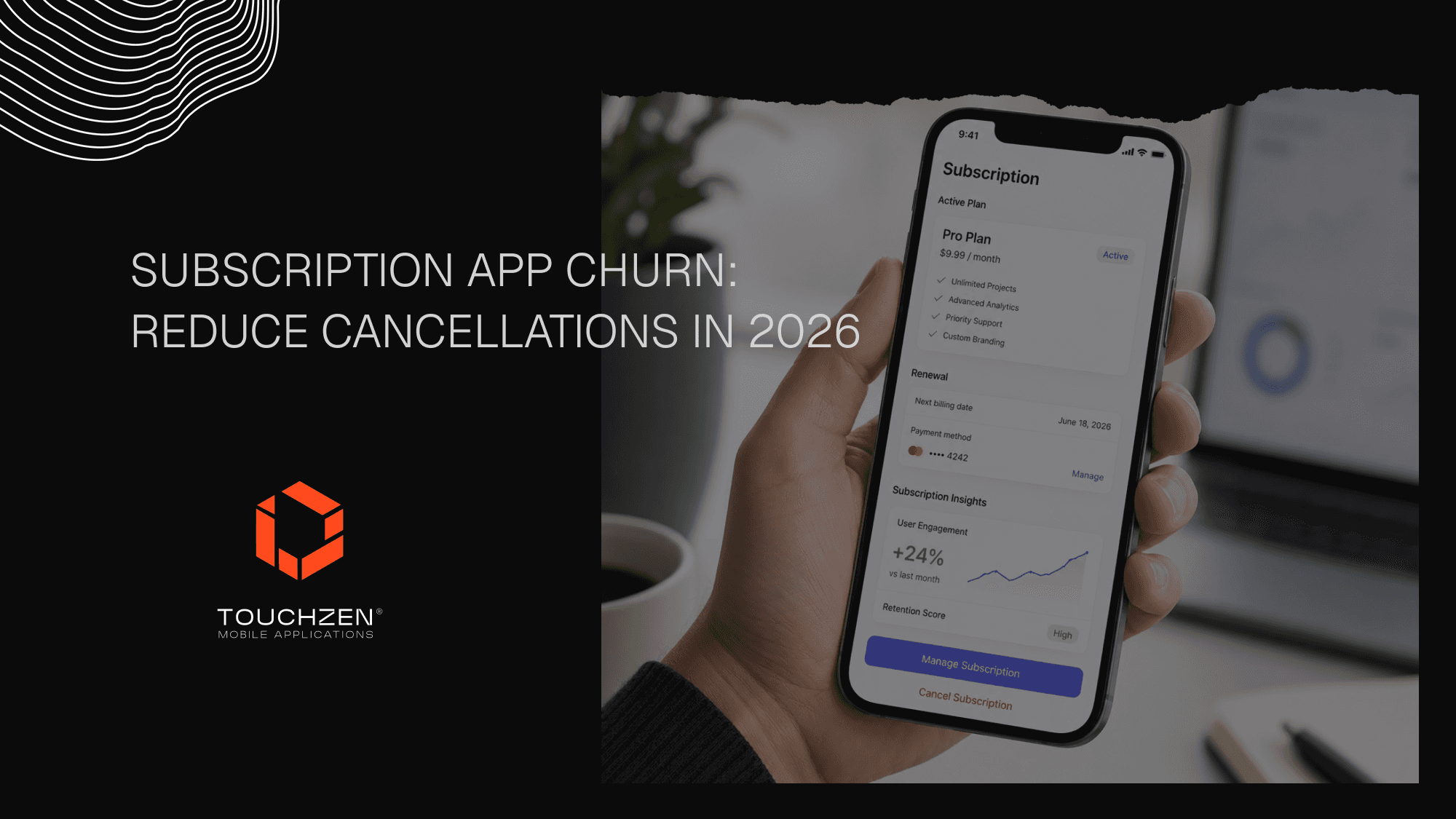
Subscription app churn reduction strategies for founders. How to cut cancellations, run save flows, and keep mobile subscribers longer in 2026. Most subscription apps focus all their energy on getting users to subscribe. The teams that grow sustainably also focus on keeping them. Here is a practical, founder-friendly guide to subscription app churn reduction.
Introduction
For most subscription apps, the early months go something like this. The team obsesses over the paywall, the trial flow, and the first conversion. Numbers start to move. The board update looks good. Then, quietly, the cancellation list grows. The cohort that subscribed in March is half the size by July. The hard-won growth from acquisition is leaking out the back.
This is the story of subscription churn, and it is the most common reason promising mobile apps stop scaling. Subscription growth is not only about getting more users to pay. It is about keeping the right users subscribed long enough for the product to compound their value.
This guide walks through what churn really is, why it matters, the common reasons users cancel, what founders should measure, and the practical levers that actually reduce subscription cancellations in mobile apps. It is written for founders and product owners who want their retention curves to start matching their acquisition charts.
For founders building subscription products, working with an experienced mobile app development team can help make retention, onboarding, and cancellation flows part of the product strategy from the start.
What Subscription Churn Means and Why It Matters
Subscription churn is the rate at which paying users cancel over a given period, usually expressed as a monthly or annual percentage. A 5% monthly churn rate means the app loses roughly half of its paying base every fourteen months, regardless of what acquisition is doing.
Even small improvements in subscription churn can significantly increase subscriber lifetime value over time. When more users stay subscribed for longer, the business becomes less dependent on constant new acquisition and more capable of compounding from the audience it already earned.
Churn matters because it determines whether the business can grow without burning cash on acquisition forever. Apps with healthy retention compound. Apps with high churn run on a treadmill.
The Common Reasons Users Cancel
A few patterns show up consistently when we audit subscription apps with churn problems.
The user never understood the value quickly enough. The trial ran out before they hit the moment that would have made the subscription feel worth paying for. The app never made it into the user's routine. They subscribed with intent but did not build a habit, and the renewal felt like paying for something they had stopped using.
Pricing felt disconnected from usage. Users who paid for a yearly plan after using the app twice tend to feel the bill more sharply than users who built a habit first. Onboarding set the wrong expectations. The first screens promised one thing, the actual experience delivered another. Too many features were locked too early. Users hit the paywall before they hit the value, then never came back to find out what was behind it.
The cancellation flow gave no reason to stay. The user tapped "cancel," saw a confirmation, and was gone in seconds. Bugs, friction, and poor support eroded trust over weeks. Retention messages were weak or irrelevant. Generic "we miss you" emails do not bring people back.
Each of these is fixable. None of them are fixed by lowering the price.
What Founders Should Measure
Most teams overinvest in acquisition metrics and underinvest in retention metrics. A useful starting set:
Trial-to-paid conversion. What share of trial users convert to paying subscribers? A drop here is usually an onboarding or value-clarity problem.
Monthly churn rate, by plan. Monthly subscribers, annual subscribers, and any other tiers usually churn at different rates and deserve different responses.
Cancellation reasons. A short exit survey, captured at the cancellation moment, surfaces the most actionable signal in the entire funnel.
Feature usage before cancellation. Which features did churned users actually use? Which ones did they never discover?
Cohort retention. How does the cohort that subscribed in January look in May, July, and October? Cohort curves tell the truth that monthly averages hide.
Subscription plan performance. Annual versus monthly versus other plans. Conversion, churn, refund rate, LTV.
Refund requests and support tickets. Common themes here are early warnings for churn drivers that have not yet shown up in cancellations.
If the team is not looking at these regularly, churn is being managed by guess.
Strong UI/UX design also plays a major role here, because clearer onboarding, better paywall flows, and easier cancellation feedback can help teams understand why users stay or leave.

Practical Ways to Reduce Subscription Churn
The levers that actually move churn cluster into a handful of areas.
Improve Onboarding and Activation
Most churn is decided in the first week. A user who hits a real value moment in the first session retains far better than one who does not. Strong onboarding sequences users into the habit the subscription depends on, and gets them there faster than the trial can run out.
Show Value Before Asking for Long-Term Commitment
Annual plans drive better LTV when users have already built the habit. Pushing annual subscriptions on day one often converts well in the short term and churns hard in the long term. Sequence the ask: monthly first, annual after the habit is real.
Use Lifecycle Messaging Carefully
Email, push, and in-app messaging should arrive at moments that matter. A user approaching renewal who has not opened the app in two weeks needs a different message than one who has been active daily. Generic blasts to the whole base usually do more harm than good.
Add Cancellation Surveys and Save Flows
When a user taps cancel, the screen they see next is one of the highest-leverage retention surfaces in the entire app. A short, respectful survey paired with a thoughtful save offer (pause, downgrade, switch plans, contact support) recovers a meaningful share of would-be cancellations without ever discounting.
Offer Pause, Downgrade, or Plan-Switch Options
Many users cancel because they are over-served, not because they hate the product. A pause for one or two months keeps them in the funnel. A downgrade to a smaller plan keeps revenue flowing. Both are usually better than a full cancellation.
Build Win-Back Campaigns
Users who cancel today are not gone forever. A small, well-timed win-back sequence at thirty, ninety, and one hundred eighty days, with a clear reason to come back, recovers more revenue than most teams expect.
Improve Performance and Reliability
A subscription is a recurring trust decision. Slow apps, crashes, sync issues, or buggy features all erode that trust quietly. Reliability work is retention work.
Make Pricing and Benefits Clearer
If users cannot articulate what they are paying for, they will stop paying for it. Clear paywall copy, in-app reminders of premium value, and honest renewal communications all reduce surprise cancellations.
What Not to Do
A few habits are tempting and almost always backfire.
Do not trap users in confusing cancellation flows. Apple, Google, and consumer regulators are all increasingly strict about this, and the brand damage outlasts any short-term retention bump.
Do not spam users with notifications. Retention messaging that pushes too hard ends up muted, then deleted. Quality and timing matter more than frequency.
Do not hide the real value behind vague premium labels. "Pro" and "Premium" tell the user nothing. Plans should describe what the user gets, not how it is branded internally.
Do not rely only on discounts. A user who cancels for a 50% off coupon is usually one churn cycle away from canceling again. Discounts solve a price objection. They do not fix a value problem.
A Founder Checklist for Reducing Subscription Churn
Before opening a major retention initiative, work through these:
Have we identified the first real value moment in the app, and do users reach it during the trial?
Are we measuring trial-to-paid conversion and monthly churn by plan?
Is there an exit survey in the cancellation flow, with the results actually being read?
Does the cancellation flow offer a save option (pause, downgrade, contact support)?
Are lifecycle messages segmented by user behavior, not blasted to everyone?
Have we run a win-back campaign in the last ninety days?
Are we tracking which premium features churned users did and did not use?
Is the paywall copy specific enough that users could articulate what they pay for?
Are reliability and performance issues in the bug backlog being treated as retention issues?
If two or more of these are blank, churn is being managed less seriously than it deserves to be.
How TouchZen Media Helps Reduce Subscription Churn
Reducing subscription churn is rarely a single fix. It sits at the intersection of product design, UX, engineering, and lifecycle messaging, and the apps that retain well usually treat all of them as connected.
At TouchZen Media, we work with founders building and scaling subscription mobile apps across iOS and Android, including Flutter and React Native projects where the same product needs to feel native on both platforms. Our process spans strategy, UX/UI design, native and cross-platform development, QA, launch, and post-launch growth, which means churn-reduction work usually starts where the product, design, and data overlap, not in a single team's queue.
If your subscription app has growing acquisition and frustrating retention, the team can help diagnose where churn is really happening and put a focused plan behind fixing it. Get in touch when you are ready to talk through the picture.
Conclusion
Subscription app churn reduction is one of the highest-leverage product investments a founder can make. The teams that take it seriously usually move retention more in one quarter than acquisition campaigns move it in a year. The levers are not glamorous. Better onboarding. Smarter lifecycle messaging. Real save flows. Honest pricing. Reliable performance. Treated together, they compound into a business that grows on its own foundation.
The teams that get this right stop chasing the next install and start protecting the subscribers they already earned.
Frequently Asked Questions
1. What is subscription churn in a mobile app?
Subscription churn is the percentage of paying users who cancel during a given period. Most apps measure it monthly. A 5% monthly churn rate means roughly half of paying subscribers will be gone within fourteen months, no matter how strong acquisition is.
2. What is a healthy churn rate for a subscription app?
It depends on category and price point, but most consumer apps aim for monthly churn in the 3% to 6% range, with longer-tenured cohorts typically churning lower. The right comparison is your own cohorts over time, not industry averages.
3. Why do users cancel subscription apps?
The most common reasons are unclear value, no habit forming during the trial, mismatched pricing for usage, weak onboarding, premium features locked too early, frustrating cancellation flows, performance issues, and irrelevant retention messaging.
4. Should I offer discounts to prevent cancellations?
Sparingly. Discounts can save the occasional churn but do not fix the underlying value or habit problem. Pause, downgrade, plan-switch, and feature-education offers usually retain better and protect long-term revenue.
5. What is a save flow in a subscription app?
A save flow is what happens after the user taps "cancel" but before the cancellation is final. It usually includes a short exit survey, optional pause or downgrade offers, plan-switch options, and a path to contact support. Done well, it recovers a meaningful share of would-be cancellations.
6. How often should I run win-back campaigns for churned users?
A reasonable cadence is at thirty, ninety, and one hundred eighty days after cancellation. Each touchpoint should be short, specific to what has improved or what the user might have missed, and not feel like generic re-engagement spam.
7. Can better UX really reduce subscription churn?
Yes, often significantly. Onboarding, paywalls, cancellation flows, and in-app value cues are all UX surfaces, and improvements to them consistently lift retention. Churn is rarely a purely commercial problem. It usually has a design dimension that pays back when invested in.