Joy Foroughi
Executive Assistant


Decide What to Build Next: Senior Mobile Strategy for PMs & Founders
Turn research, business goals, and feature requests into a prioritized mobile app roadmap with measurable outcomes and a clear plan for what to build next.

Product strategy consulting for mobile apps decides what to build next by turning research, business goals, and feature requests into a prioritized, testable roadmap tied to measurable outcomes. We build these engagements for product managers, startup founders, and business leaders who need clarity fast. The fastest way to find out where you stand is a short discovery workshop that audits your current backlog against real user data.
TL;DR:
Prioritization frameworks like RICE are most effective when applied consistently and validated by running ideas through multiple methods before committing.
Early feasibility checks, including technical spikes, should happen during scoring to prevent delays during development.
Stakeholder alignment is best achieved through shared scoring, transparent rationale, and focusing debates on outcomes instead of features.
Research should be delivered in sync with planning cycles, framing recommendations as testable outcomes with clear success metrics and effort estimates.
Senior involvement throughout the process enhances roadmap realism, accelerates decision-making, and increases the likelihood of measurable success.
What product strategy consulting for mobile apps actually delivers
A good consulting engagement is not a brainstorming session that ends with a longer list of ideas. It is a structured process that narrows a wide set of possibilities into a short, defensible set of next steps, backed by evidence you can point to when a stakeholder pushes back.
Discovery work typically combines a few methods, each covering a gap the others miss:
User interviews that surface the problems people actually have, not just the features they ask for.
Analytics review that shows where users drop off, stall, or abandon a flow entirely.
Top-task surveys that rank what users came to do, so the roadmap reflects demand instead of guesswork.
Once the research is in, the real work starts: framing. Every opportunity gets defined as a problem and an outcome, not a feature request. Instead of "add a dashboard," the frame becomes "users can't tell if their subscription is active, which drives support tickets." That framing matters because it keeps the team focused on the result, not the solution, until the data points to one.
The deliverables that come out the other end usually include a prioritized backlog with scoring attached (we will walk through RICE, MoSCoW, and Kano shortly), a defined MVP scope that separates must-haves from nice-to-haves, and a release plan that sequences work across realistic timeboxes. For founders especially, the MVP definition tends to be the most valuable piece: it is the difference between shipping something testable in weeks and spending months building features nobody asked for. If you are still shaping that first release, our guide to roadmap essentials for founders covers the groundwork in more depth.
When to hire a consultant vs keep prioritization in-house
Not every team needs outside help to decide what comes next. But certain patterns are reliable signals that internal prioritization has stalled.
A roadmap that hasn't shipped anything meaningful in months, often because every feature feels equally urgent.
Competing priorities from sales, support, and leadership that never get resolved, just reshuffled.
No recent user research, so decisions rely on the loudest opinion in the room instead of evidence.
A growth target with a deadline attached, where the cost of picking wrong is higher than usual.
If none of these apply, in-house prioritization with a lightweight framework is often enough. But once two or more show up together, bringing in outside structure tends to pay for itself by cutting the time spent debating instead of building.
Engagement formats scale with the problem. A one to two day workshop works well when the team has data but needs a neutral facilitator to force decisions. A two to six week discovery engagement fits teams that need research done from scratch, interviews, analytics audits, competitive scans, before prioritization can even start. A six to twelve week strategy engagement suits larger organizations with multiple stakeholder groups, legacy products, or a roadmap that needs to be rebuilt from first principles.
The teams that benefit most are usually the ones under time pressure: founders racing toward a funding milestone, or product managers who inherited a backlog with no documented rationale behind it.
How to decide what to build next: scoring frameworks and a practical workflow
Picking the right framework matters less than picking one and applying it consistently. RICE is the most common starting point because it forces four separate judgments instead of one gut call: reach (how many users this touches), impact (how much it moves the needle for each of them), confidence (how sure you are about the first two numbers), and effort. Effort estimates the total work required across the team, measured in person-months. Intercom's RICE model uses rough estimates, including 0.5 for work taking well under a month. Because effort is the denominator in the score, a lower estimate raises an idea's score when the other inputs stay the same.
RICE works best for cross-functional prioritization, where you are comparing ideas from different teams on the same scale. MoSCoW (must have, should have, could have, won't have) fits better inside a single sprint or release, when the question is narrower: what absolutely has to ship this cycle. Kano is useful when you specifically want to separate features users expect from ones that would delight them, which matters most early in a product's life when you are still defining the baseline experience. Impact-effort matrices and other prioritization matrices are the right tool when you need a visual, team-friendly way to sort a large backlog quickly, and they double as a shareable artifact that documents why decisions were made, which matters later when someone asks why a feature got cut.
A workflow that holds up across most of these frameworks looks like this:
Capture every idea from research, support tickets, and stakeholder requests in one place, without filtering yet.
Map each idea to a specific outcome it is supposed to move, not a feature description.
Score consistently using the framework that fits the decision (RICE for cross-team comparison, MoSCoW for sprint scope).
Sequence by dependency and learning value, not just by score alone.
Validate the top items with a small test before committing full engineering time.
Scoring alone will not eliminate bias. Combining quantitative scores with a quick qualitative check, asking design, engineering, and support to each weigh in, catches blind spots a spreadsheet misses. NN/g's prioritization methods overview points out that different methods suit different contexts precisely because no single score captures feasibility, desirability, and viability at once.
Pro Tip: Run the same ten ideas through two different frameworks before committing. Agreement can strengthen confidence in the ranking, but it does not validate the underlying assumptions. If the rankings diverge, review the inputs, weighting, and goals of each framework, then gather more evidence where needed.
Turning research into the roadmap: timing, cadence, and packaging recommendations
Research that arrives after the roadmap is locked gets ignored, no matter how good it is. One of the most overlooked parts of this work is matching the pace of research to the pace of planning. A small, five-person usability study delivered before a planning meeting can change more decisions than a twenty-person study that lands two weeks after the roadmap is already set, according to NN/g's guidance on getting research onto the roadmap.
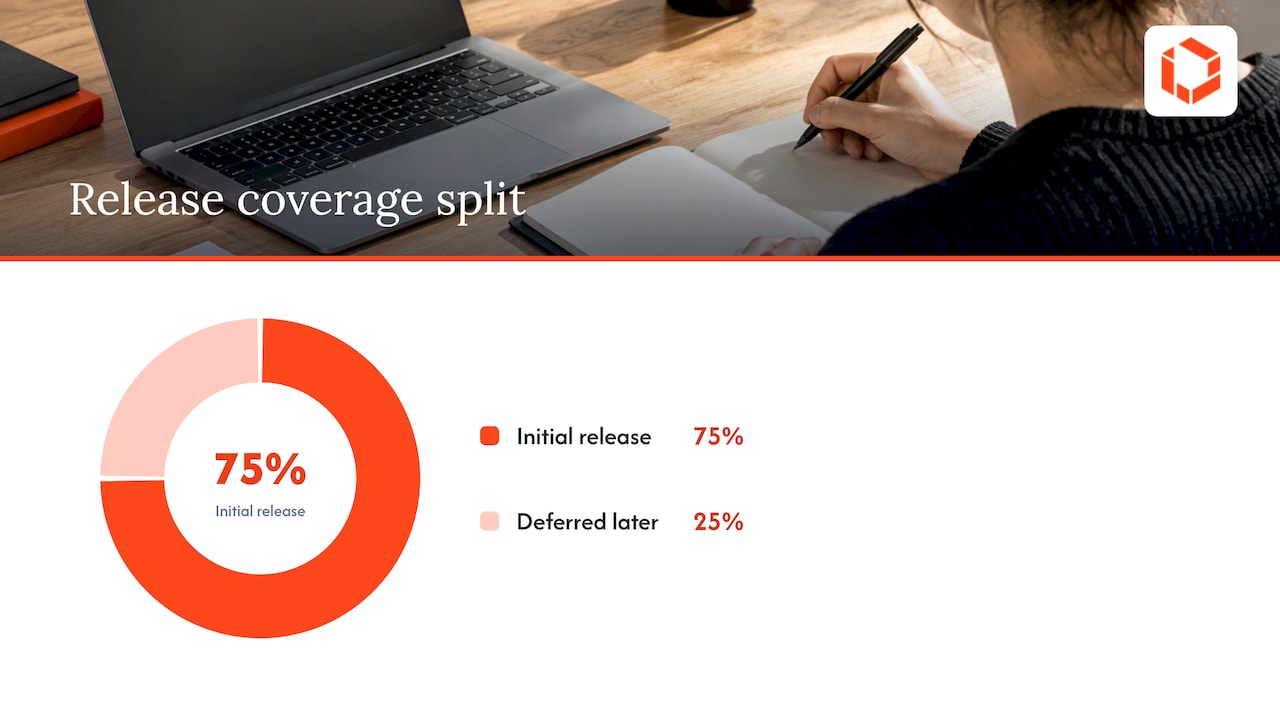
Vanguard's mobile app team set an initial-release target covering roughly 75% of top tasks identified through user research, deferring more complex, power-user functionality to later releases under a crawl, walk, run approach, as documented in NN/g's Vanguard case study. The 75% figure was specific to that project, not a universal MVP target; the useful lesson is to define first-release scope around researched user priorities.
Packaging matters as much as timing. A recommendation that says "improve onboarding" will sit in a backlog forever. A recommendation written as a testable roadmap item looks different:
States the problem and outcome, not the feature, so the team stays focused on the result.
Includes a rough effort estimate, even a loose one, so it can be compared against other items.
Names a success criterion up front, so everyone agrees in advance what "it worked" looks like.
Framing roadmap items around problems and outcomes rather than a running list of features tends to earn faster buy-in from stakeholders outside the product team, because it ties the decision to a result they already care about rather than a solution they have to trust blindly, a point NN/g makes directly in its roadmap guidance.
Sequencing and decision horizons: now, next, and future
A roadmap without time horizons is just a wish list. Splitting work into now, next, and future forces honest conversations about what is actually ready to build versus what still needs more learning before it deserves engineering time.
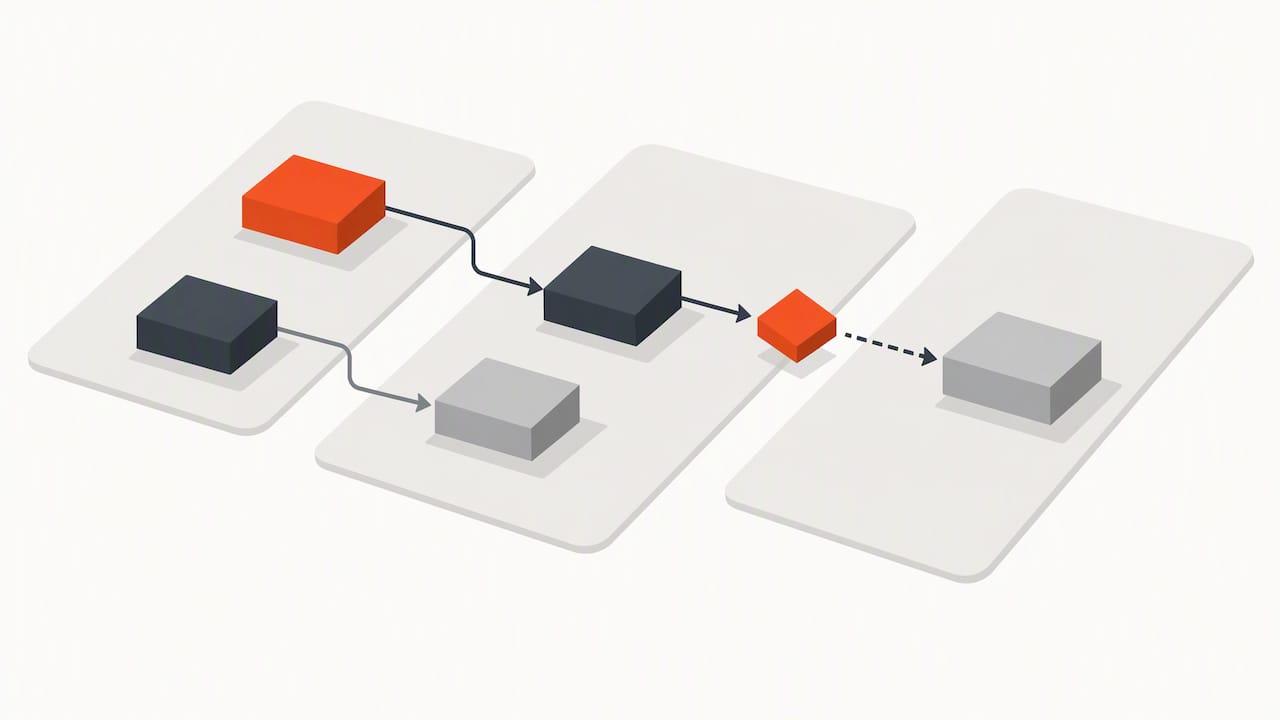
Now covers items with clear scope, validated demand, and a defined success metric, scoped tightly enough to ship inside the current cycle.
Next holds items that are directionally right but need more research, a technical spike, or a dependency resolved before they move into "now."
Future captures ideas worth remembering but not worth planning around yet, often because they depend on signals the team doesn't have.
This structure pairs naturally with progressive disclosure and a crawl, walk, run release pattern: ship the narrow version that proves the core assumption, then expand once real usage data confirms the direction is right.
Sequencing rules work best when they are tied explicitly to dependencies and learning objectives. If feature B can't be evaluated without feature A shipping first, that dependency belongs in the "now" versus "next" decision, not buried in a backlog note. If you are mapping out what belongs in a first release versus later phases, our piece on launching an MVP in 90 days walks through that scoping decision in more detail. The discipline here is less about the framework and more about refusing to let "now" quietly expand until it contains everything.
Engagement process, timelines, and what good deliverables look like
Most engagements fall into one of three shapes, and matching the format to the problem matters more than picking the most comprehensive option available.
A one to two day workshop produces a scored backlog and a rough now/next/future split, ideal when the team already has data but needs facilitation to make decisions stick.
A two to six week discovery engagement adds original research, interviews, analytics audits, competitive review, and ends with a defined MVP scope and release plan.
A six to twelve week strategy engagement covers multiple product lines or stakeholder groups and typically ends with sprint-ready user stories, not just a prioritized list.
Good deliverables share a few traits regardless of format: a scored backlog that shows the reasoning behind each ranking, a roadmap organized by time horizon rather than a flat feature list, defined success metrics attached to each major item, and stories specific enough that an engineering team can start estimating without a follow-up meeting.
Senior involvement changes the quality of these outputs more than most teams expect. A senior strategist has seen enough failed launches to ask the uncomfortable question early, like whether a feature actually solves the stated problem or just sounds good in a meeting, rather than six weeks into a build. That is part of why direct access to senior staff throughout an engagement tends to produce faster, more accurate scoping than a model where strategy gets handed off to whoever is available.
Measuring success: tying roadmap items to real metrics
A prioritized roadmap only proves its value once you can point to a number that moved. Before committing engineering time to any item, pick one to three leading metrics it is supposed to affect, activation, retention, conversion, or support ticket volume are the most common, and write down what success looks like in concrete terms.
Define the hypothesis before you build, not after: "Adding an onboarding checklist increases 14-day activation by a defined percentage" is testable; "improve onboarding" is not.
Use staged rollouts or A/B tests to validate the change on a subset of users before committing to a full release.
Watch support ticket volume, not just activation and retention, since a feature that quietly increases confusion often shows up there first.
Analytics tooling does the heavy lifting here, and choosing the right setup matters more than most teams realize when the roadmap depends on catching small shifts early; our explainer on mobile app analytics covers what to track and why. Staged rollouts deserve the same attention: shipping a feature to 10% of users before a full release limits the damage if the hypothesis turns out wrong, a pattern we cover in more detail in our piece on feature flags and progressive rollouts.
Pro Tip: Write the success metric and the kill criterion in the same sentence as the roadmap item. If a feature misses its target within the stated window, review the evidence against the agreed criteria and decide whether to iterate, pause, or roll it back. Consider adoption, measurement quality, and the time needed for the outcome to emerge before making that call.
What a senior-led consulting model actually changes
We have helped launch many apps across a range of industries, and the pattern we see most often is that strategy decided by senior staff, not handed down from a junior team, is what keeps a roadmap realistic instead of aspirational.
Direct access to senior developers and designers from kickoff through launch means fewer rounds of rework caused by miscommunication between strategy and execution.
Faster timelines and higher accountability follow naturally when the people making prioritization calls are the same people who will be asked to build against them.
Documented outcomes from past builds help assess a consulting team's experience. Ask for case studies showing changes in activation, retention, subscriptions, or downloads, along with the context and other factors that may have contributed to those results.
Ongoing support after launch keeps the roadmap evolving instead of freezing the moment the app ships, since the assumptions that shaped the MVP rarely hold unchanged six months later.
That combination, senior ownership plus continued involvement post-launch, is what keeps a strategy from becoming a document nobody revisits.
Tech feasibility considerations and collaboration with development teams
A prioritized backlog means nothing if engineering can't build the top item within the assumed timeframe. Feasibility checks belong earlier in the process than most teams put them, ideally during scoring, not after a feature has already been promised to stakeholders.
The practical move is a short technical spike on anything with real uncertainty, a day or two for engineering to confirm an API exists, a third-party integration behaves as expected, or a platform constraint (iOS review guidelines, for instance) doesn't block the approach entirely. Skipping this step is one of the most common reasons a "quick win" on paper turns into a six-week project in practice.
Collaboration works best when engineering has a seat in the prioritization conversation, not just a handoff after decisions are made. An engineer flagging that two seemingly separate features share the same underlying data model can change the sequencing entirely, building them together instead of twice. This is also where effort estimates in frameworks like RICE get sharpened: a rough person-month guess from a scoring session becomes a real number once someone who will write the code has looked at it.
For cross-platform builds specifically, feasibility conversations often surface a framework decision, Flutter versus React Native versus native, earlier than expected, since that choice affects almost every effort estimate on the roadmap.
Methods for stakeholder alignment and managing conflicting priorities
Conflicting priorities are rarely a disagreement about facts. They are usually a disagreement about which outcome matters most, dressed up as a debate about features. Naming that distinction out loud is often the fastest way to defuse it.
Prioritization matrices and structured voting give stakeholders a shared, visual way to weigh in without turning the conversation into whoever argues loudest. NN/g's research on prioritization matrices notes that this kind of artifact also documents the reasoning for later, which matters when someone questions a decision months after it was made.
A few habits keep these conversations productive:
Score ideas as a group, not behind closed doors, so stakeholders see the inputs, not just the output.
Anchor every debate to the stated outcome, redirecting "I want feature X" back to "what problem does X solve, and how do we know."
Document the rationale, not just the ranking, so a decision doesn't get relitigated every quarter.
When priorities genuinely conflict, the roadmap's now/next/future structure gives a natural way out: an idea that doesn't win the "now" slot isn't rejected, it moves to "next," which tends to lower the temperature considerably compared to an outright no.
Risk management and contingency planning for mobile app features
Every roadmap item carries some risk of being wrong, about demand, about effort, or about whether it actually moves the metric it was supposed to. Planning for that upfront is cheaper than discovering it after a full build cycle.
The confidence score inside RICE exists for exactly this reason: a low-confidence, high-impact idea deserves a cheap validation step before full investment, not a greenlight based on optimism alone, a distinction ProductPlan highlights as one of the model's main advantages over flat priority lists.
Practical contingency planning usually includes a few concrete moves: staged rollouts that limit exposure if a hypothesis fails, a defined rollback plan before a feature ships rather than improvised after, and a pre-agreed kill criterion tied to the success metric, so stepping back from a feature that isn't working is a planned decision instead of a political one. Dependencies deserve the same scrutiny. If a "now" item depends on a third-party API or a platform policy that could shift, that risk belongs in the sequencing conversation, not discovered mid-sprint. Building a small buffer into each release's timeline, rather than assuming every estimate holds exactly, tends to prevent the kind of schedule slippage that cascades into the next quarter's roadmap.
Common mistakes and habits that actually work
The failures we see most often share a pattern: research arrives after the roadmap is locked, feature lists get prioritized with no sequencing logic attached, and recommendations show up without an effort estimate or a success metric, so they stall in the backlog indefinitely.
The habits that consistently work are less exciting but more reliable: frame every item as a problem and an outcome before scoring it, pull engineering into feasibility conversations before commitments get made publicly, and treat research timing as part of the plan, not an afterthought. None of this requires more process. It requires sequencing the process you already have so it arrives before the decision, not after.
How TouchZen can help you decide what to build next
If you have read this far, you already know the gap is rarely ideas, it's deciding which ones deserve engineering time first. Our Product Strategy & Consulting engagement does exactly the work covered above: discovery, opportunity framing, scored backlog, MVP definition, and a sequenced roadmap, delivered by senior strategists who stay involved through the build, not a team that disappears after the workshop ends.

Getting started is simple. Come to a discovery call with your current backlog, whatever analytics you have on hand, and a rough sense of your growth target for the next two quarters. From there we scope the engagement size that fits, a short workshop or a full discovery sprint, and agree on the deliverables and timeline. The roadmap is delivered within that agreed scope and schedule, with a full discovery sprint requiring more time than a short workshop. If you are closer to execution than strategy, our Mobile App Development and MVP Development for Start Ups services pick up right where the roadmap leaves off.

FAQ
What are the 7 stages of app development?
App development generally moves through discovery and research, strategy and planning, UX and UI design, prototyping, development, testing and QA, and launch, followed by ongoing support. The exact breakdown varies by team, but research and prioritization at the start are what determine whether later stages run smoothly.
What are mobile app consulting services?
Mobile app consulting services cover the strategic work that precedes or runs alongside development, including market and competitive research, feature prioritization, MVP definition, and roadmap planning. Our Product Strategy & Consulting engagement covers this exact scope for founders and product teams.
What are some tips for successful mobile app development?
Keep the first release narrow enough to validate your core assumption instead of trying to cover every use case at once, a pattern illustrated by Vanguard's initial release, which covered roughly 75% of its researched top tasks. That percentage was specific to Vanguard's project and should not be treated as a target for every app. Pair every feature decision with a defined success metric so you know quickly whether it worked.
How to choose the best mobile app development company?
Look for direct access to senior developers and designers rather than a team that hands your project to junior staff after the pitch, since that typically affects both speed and quality of the final build. Ask for documented outcomes from past projects and confirm what ongoing support looks like after launch, since most apps need meaningful iteration in their first year.